How much does a ton of CO2 cost in Ukraine and the world and what will the implementation of the requirements of the CBAM Regulation look like

November 15, the third set of the course “EcoSpeak – professional English
15.11.2023
The government has approved the licensing conditions for conducting business related to hazardous waste management
07.12.2023In recent decades, climate change has turned into one of the most acute problems of the world economy and requires the development of strategies to reduce greenhouse gas emissions and transition to low-carbon development of all sectors of the economy.
Strategic goals for decarbonization and a consistent approach to their achievement are a logical continuation of Ukraine’s European integration course. The post-war reconstruction of Ukraine should be based not only on the reconstruction of the destroyed, but also taking into account climate goals, the green transition and the transition to a sustainable economy.
Ukraine, as a candidate for EU membership, should strengthen competitiveness and energy independence, as well as contribute to the global fight against climate change and contribute to the fulfillment of climate obligations.
According to scientists, in the next 10 years, all countries of the world should lay the foundations for the transformation of various sectors of the economy in order to reduce emissions into the atmosphere. And Ukraine, as part of the world community, is also an active participant in the fight against the global challenge.
Back in July 2021, the Government of Ukraine approved the Updated National Determined Contribution of Ukraine to the Paris Agreement (NDC2). The goal of the document is to reduce greenhouse gas emissions by 35% compared to 1990 by 2030.
The volume of CO2 emissions in Ukraine over the last decade has decreased by 44.8% since 2006. In 2006, their number was 321.3 million tons of CO2, and already in 2020 – 177.4 million tons of CO2.
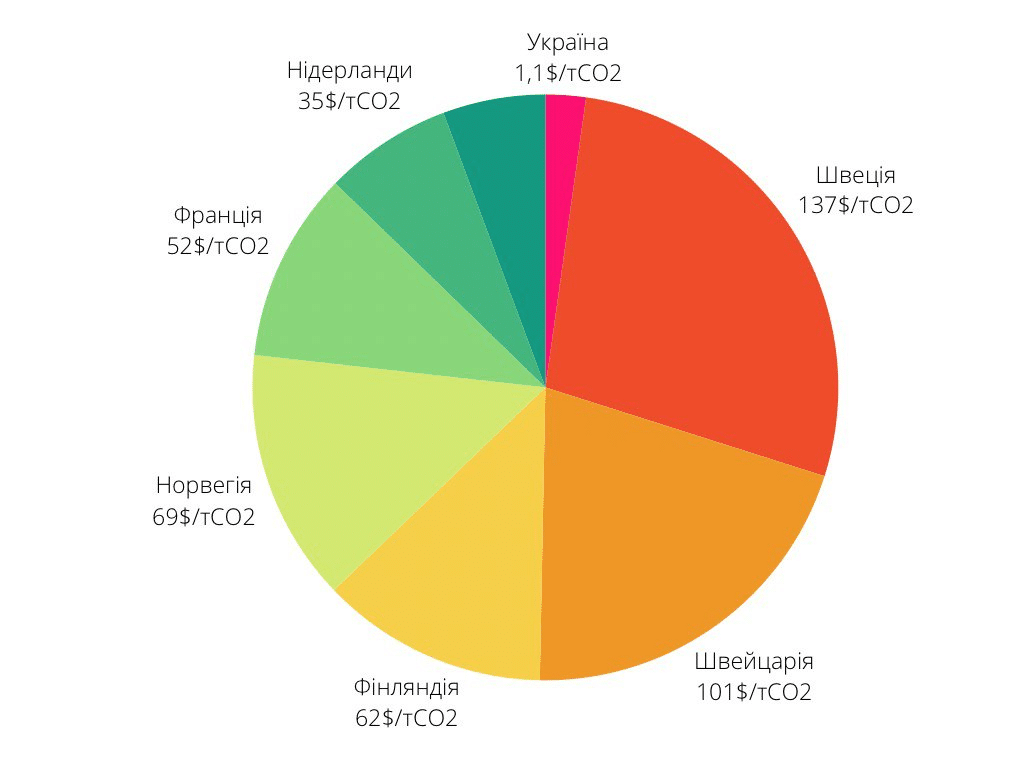
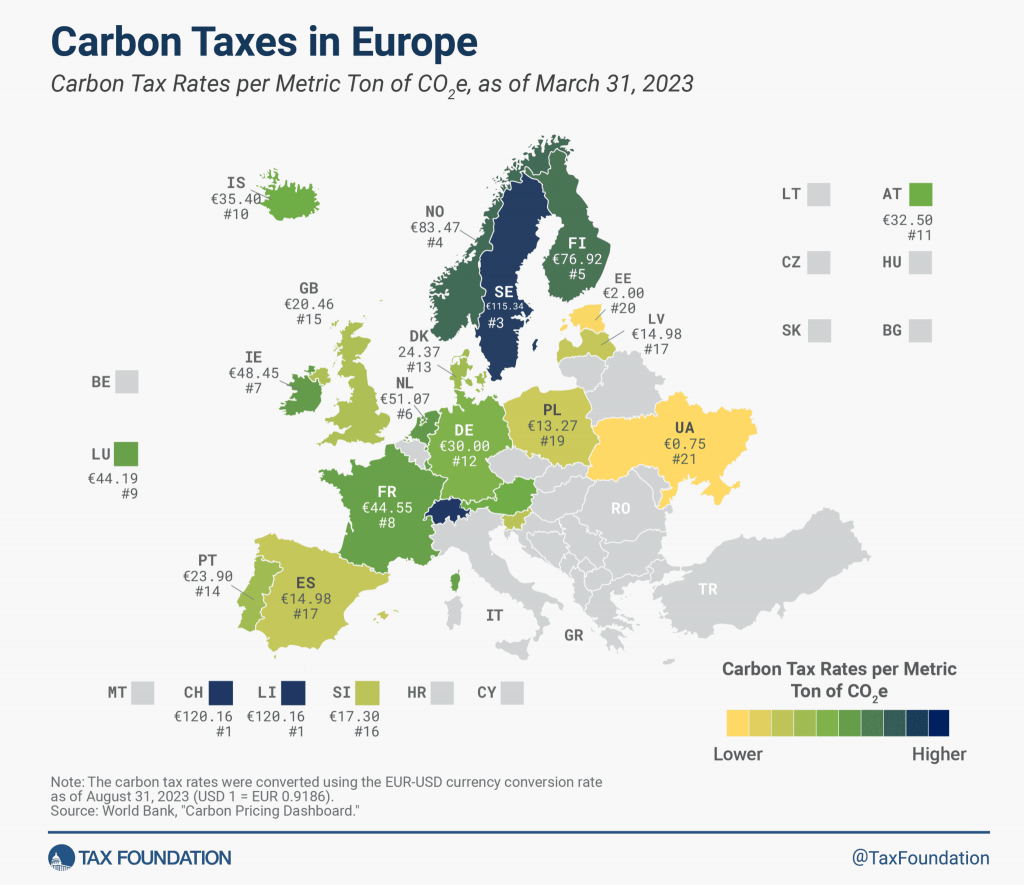
By the way, starting from January 1, 2022, the tax rate on carbon emissions in Ukraine increased from UAH 10 (USD 0.3)/tCO2e to UAH 30 (USD 1)/tCO2e. This rate, even after its increase, will still remain the lowest in Europe (with the exception of Poland) compared to other countries. For example, in Sweden the rate is the highest and is $137/t CO2, in Switzerland — $101/t CO2, Finland — $62/t CO2, Norway — $69/t CO2, France — $52/t CO2, the Netherlands — $35/t CO2 , Portugal — $28/t CO2, in Ukraine, respectively — $1.1/t CO2.
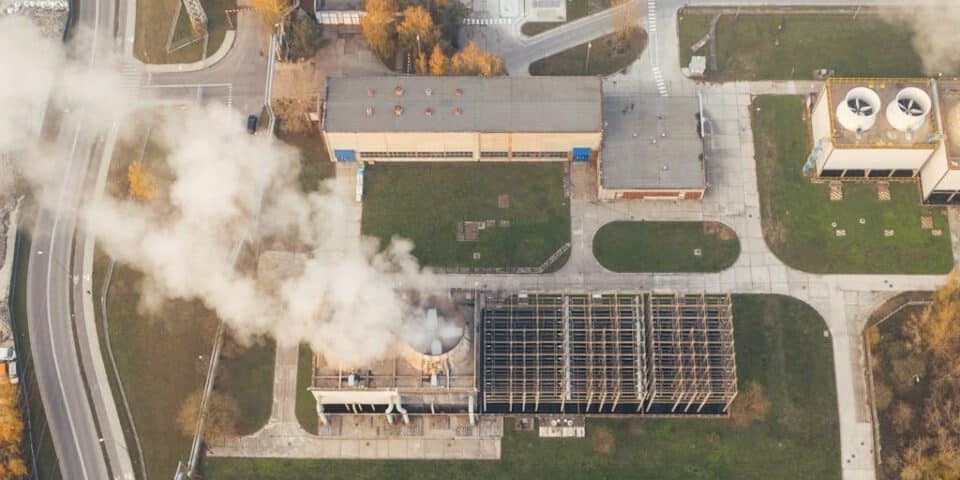
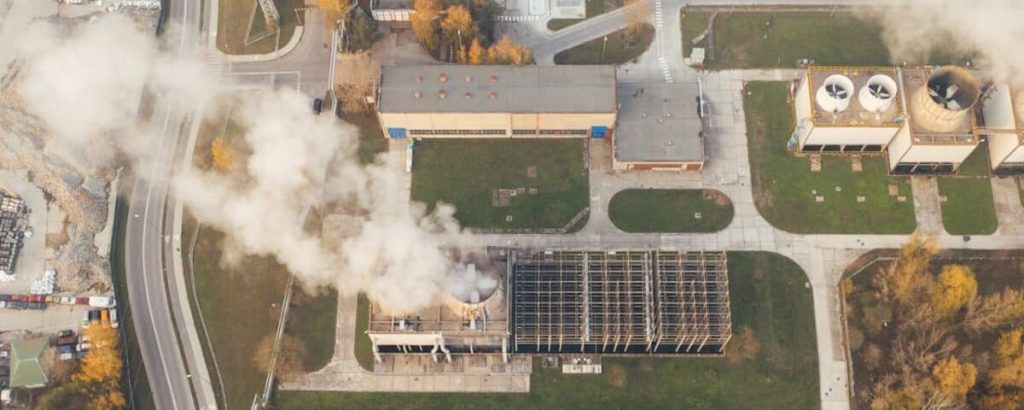
The reasons for the reduction in the volume of CO2 emissions in Ukraine are different: the reduction of production in energy-intensive sectors of the economy (due to russian aggression against Ukraine), the growth of capital investments in the metallurgy and energy sectors in the pre-war years.
“Further reduction of emissions remains relevant and necessary, given the challenges that Ukrainian business faces after the introduction of the Carbon Border Adjustment Mechanism (CBAM) for the import of carbon-containing products from third countries after 2026,” says Oleg Bota, director of the Company “Center LTD”.
The Carbon Border Adjustment Mechanism (CBAM) is is a European Union environmental policy instrument designed to balance the costs of carbon emissions of products imported into the EU with the costs that would be incurred by businesses operating within the EU.
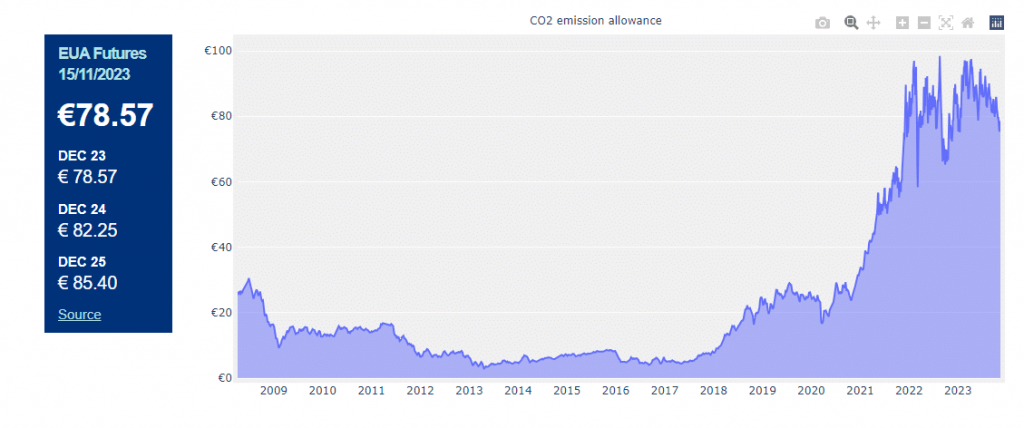
The CBAM mechanism will help prevent carbon leakage outside the EU and encourage producers from non-resident countries to use technologies that are more effective in reducing greenhouse gas emissions. For this reason, CBAM is expected to effectively support the reduction of global greenhouse gas emissions.
From October 1, 2023, importers to the European Union must report CO2 emissions. Read about what the implementation of the requirements of the CBAM Regulation will look like in the article prepared by the “Center LTD” Company. Please note that non-compliance by importers with the requirements of the Regulation entails the imposition of a fine and subsequent prohibition of trade in the EU.
If you have questions about CBAM and its impact on your business, “Center LTD” specialists will help you with a CBAM impact assessment, preparation of a quarterly report and determination of the price to be paid in the country of origin for embedded emissions in imported goods, with taking into account relevant discounts or any other forms of compensation.
Contacts for providing an individual offer: 41 Sakharova St., Lviv, 79026
+380 96 781 05 37, +380 67 725 54 32, [email protected]