
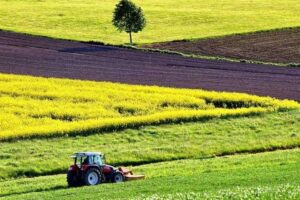
 Soil is a very valuable resource that we must treat with special care. Soil analysis is the first step to fertility management, which can provide important information and improve soil condition. After all, fertility is the key to productivity!
Center LTD conducts agrochemical analysis of soil. The company’s specialists help to determine the causes of crop failure, optimize the cost of the power supply system, determine whether a particular site is suitable for growing certain crops. After all, the soil is a living dynamic system. Therefore, it is important to monitor the dynamics of the main indicators of soil. Moreover, high-quality soil analysis at an affordable price is a profitable investment for the development of your agribusiness!
Note that every year about 24 billion tons of fertile soil is lost due to erosion, which is a consequence of unbalanced soil fertility management. Moreover, soil degradation directly affects the health and lives of approximately 1.5 billion people. Restoring the soil is quite difficult, expensive and time consuming. That is why proper soil management through analysis is more efficient and cost-effective.
Soil analysis is used to determine the composition of nutrients and acidity. With this information, you have the opportunity to determine the exact amount and type of fertilizer that needs to be applied to improve your soil. After all, fertile soil is the key to the growth of healthy crops.
Experts of Center Ltd. emphasize that it is above all important to conduct a complete analysis of the soil on the following range of indicators: acidity, buffer acidity, soluble salts, carbonate, organic matter, sodium, phosphorus, potassium, magnesium, calcium, cationic capacity. yem (ECO), nitrate nitrogen, zinc, sulfur, boron, manganese, copper, iron, soil density, saturation of bases.
- Carrying out of the analysis of soil on all above-stated indicators on a regular basis will give the chance:
- differentiate fertilizer application.
- set the limiting factor.
- use the necessary fertilizers.
- determine the time of application of fertilizers.
apply the most effective types of fertilizers The modern system of soil monitoring on agricultural lands, which is part of the state environmental monitoring system, at the same time, includes a system of monitoring, collection, processing, transmission, storage and analysis of information on changes in soil quality, their fertility, development of practically expedient and scientifically substantiated recommendations on decision-making on prevention and elimination of various negative processes.
High productivity of agriculture is possible only during comprehensive control over the condition of soils and prevention of their degradation. Fulfillment of this task is ensured by constant research on agrochemical inspection of agricultural lands, the basis of which is the control over the condition of the soil cover and the development of proposals for effective, environmentally safe application of agrochemical measures.
Comprehensive soil analysis includes determination of basic and additional agrochemical parameters (soil acidity, organic matter, content of available forms of nitrogen, phosphorus, potassium, trace elements, sulfur, electrical conductivity, soil mechanical composition) to determine soil potential and optimize mineral nutrition of plants.
Only with optimal mineral nutrition we get high yields of excellent quality, and not only preserve soil fertility, but also increase it. To achieve such high results requires a comprehensive analysis of the soil, on the basis of which, taking into account the needs of the culture and soil properties, you can calculate the introduction of all nutrients in the optimal amount for plants.
Today, conducting a comprehensive soil analysis is the optimal solution to the problem of reducing costs in agricultural production for both small farms that do not have the opportunity to buy mineral fertilizers in large quantities, and for large producers. This is achieved by accurate and reasonable application of fertilizers, as well as the ability to plan costs.
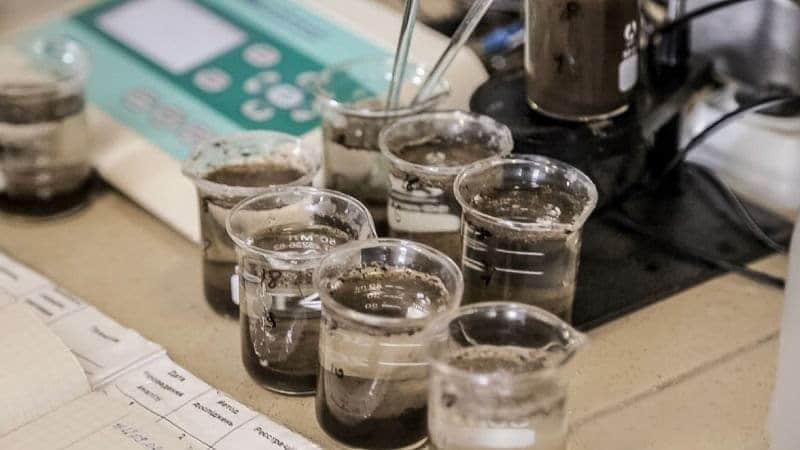 We emphasize that to understand the full picture it is important to conduct a full (maximum) analysis of the soil on the following range of indicators: acidity, buffer acidity, soluble salts, carbonate, organic matter, sodium, phosphorus, potassium, magnesium, calcium, cationic volume (ECO), nitrate nitrogen, zinc, sulfur, boron, manganese, copper, iron, soil density, saturation of bases.
- Soil acidity (soil pH). Acidic soils have more hydrogen ions (H +) and pH below 7. Neutral soils have a pH value of about 7. The pH values of most soils range from 5 to 8.5, however, weakly acidic conditions are usually the most productive (pH 6 , 4 to 6.9).
- The buffer index (buffer pH) shows the reaction of the soil to the introduction of the required amount of limestone materials. Limestone materials are added to the soil to neutralize soil acidity and increase the pH level to the optimum. If the difference between the two pH values is large, it means that the pH of the soil changes easily and there will be a sufficiently low rate of limestone materials. If the reaction of the soil buffer solution changes slightly, it means that the soil pH is difficult to change and to achieve the desired pH level requires more application of limestone materials. The buffer index is measured only when the soil pH is below 6.5.
- Excess carbonates indicate the amount of free limestone (carbonates) in the soil. Excess carbonates are associated with high pH levels, and it is very difficult to reduce the amount of free carbonates in the soil. Knowledge of the excess carbonate content in the soil can be important when choosing herbicides and rational methods of fertilizer application. Soluble salts are an indicator of the electrical conductivity of the soil solution, which shows the concentration of dissolved salts in the soil solution. High values of soluble salts indicate poor soil drainage.
- Organic matter. Organic matter content reflects the ability of the soil to supply nutrients, moisture and provide other physical benefits to plants during growth and development. Fertile soils can contain from 0.5% to 10% of organic matter depending on soil texture, local geographical conditions and prevailing climatic conditions. Organic matter acts as a storehouse of plant nutrients and improves soil structure, has a high capacity to hold cations, as well as soil moisture. The organic matter content is also an important factor in the selection of herbicides and the adjustment of fertilizer application rates.
- Nitrate nitrogen (NO3) is the most common indicator of soil nitrogen availability. Nitrate is a form of nitrogen that is easily absorbed by plants and utilized by soil microorganisms, but can also be quickly washed out of the soil. Because of this mobility, this indicator indicates the available nitrogen at the time of sampling, but not its availability later in the season.
- Phosphorus (P). The presence of phosphorus in the soil is influenced by pH and mineralogical composition. Different methods of analysis are used to determine the presence of phosphorus in different soils. The Bray method is suitable for soils with a neutral and low pH level, and according to Olsen it is used for soils with a high pH level. The Mehlich technique is used on most types of soils.
- Potassium (K). Soil texture has a great influence on the availability of potassium in the soil. On sandy soils, high potassium content can be difficult to achieve due to its leaching ability.
- Magnesium (Mg) is an important nutrient that is commonly found in soils, especially when soil pH is 6.5 or higher. Magnesium is an integral part of the chlorophyll molecule, so it is important for photosynthesis. Magnesium is also linked to the uptake and use of phosphorus by plants.
- Calcium (Ca) is an important component of plant cell walls, is also important for the good development of the root system and can neutralize some toxic compounds present in the plant. High calcium content in soils with a pH above 6. Since calcium is a major component of limestone materials used to increase soil pH, it is used to manage acidic soils.
- Sulfur (S) is an integral part of certain amino acids and is therefore necessary for protein synthesis. The ability of the soil to provide plants with sulfur is affected by the content of organic matter in the soil, the application of organic fertilizers and the receipt of precipitation (from polluted air). These sources may not be enough to meet the needs of the plant.
- Zinc (Zn) regulates energy consumption and chlorophyll production in plant cells, as well as the transmission of hereditary information during mitotic cell division. Soil tests for zinc content can show exactly whether the plants will react to the application of zinc fertilizers.
- Manganese (Mn) activates enzymes involved in photosynthesis. The presence of manganese in the soil is affected by soil pH and organic matter content. Low pH increases the availability of manganese in the soil. However, soils with a high organic matter content may have very low manganese levels.
- Copper (Cu), like iron, is an important part of chlorophyll production and is important for many enzymes. Copper deficiency is found in very acidic soils with a naturally high content of organic matter (such as peat soils).
- Iron (Fe) is a common element in many soils. Iron is essential for the plant as an integral part of chlorophyll synthesis, and is also part of many enzymes. But the availability of iron is controlled by soil factors such as pH and the presence of oxygen around the plant’s roots. Analysis of the soil for iron content helps to indicate the likelihood of its deficiency.
- Boron (B) is necessary for carbohydrate metabolism and sugar movement inside the plant (on sugar beet). Boron also plays an important role in growth processes and, together with calcium, ensures the formation of cell walls and all cell membranes. The availability of this trace element is most limited on sandy soils with low organic matter content.
- Cation exchange capacity (ECO) shows the ability of the soil to attract and retain cations (positively charged elements such as potassium, calcium, magnesium, sodium and hydrogen) in the exchange sites present in the soil and the organic matter particles in the soil. A higher value indicates that the soil has a greater ability to supply these elements to plants and accumulate during the growing season in the soil profile. Increased soil organic matter and high clay content are associated with improved soil fertility by increasing IVF levels. The value of IVF can be used to assess soil texture (particle size distribution).
- The basic saturation of bases is an indicator of the relative amount of basic elements (potassium, calcium, magnesium and sodium) present in the places of cation exchange in the soil. Soils with a neutral pH of about 6.5-8 have a higher saturation of bases. Hydrogen (H +) is an acid cation and is a source of acidity in the soil. Soils with low pH (acidic) have a high content of H + and show a lower saturation of bases. Understanding the saturation of the bases is important for understanding the effect of pH on the soil, as well as the presence of K, Ca and Mg. This is the content of basic cations, expressed as a percentage of IVF, usually predominate in the cation exchange capacity of the soil and can be controlled by the addition of fertilizers or limestone materials. The ranges are usually quite wide for calcium and magnesium, but excess calcium, in some cases, can cause magnesium deficiency. Excess magnesium can prevent the presence of potassium in the soil. And excess sodium sprays soil particles, disrupting the structure of the soil, and this can also interfere with the absorption of potassium by improving the leaching of this element in the lower layers of the soil.
- Bulk density is an indicator of the weight of the soil in a specific volume – grams of dry soil per cubic centimeter (g / cm3). Bulk density values range from 1 to 1.75 g / cm3, with lower values associated with more organic matter and higher values associated with sandy soils. High values are often associated with soil compaction and limited root system growth.
The analysis will provide an understanding of how to protect soils and achieve the desired result – high yields.
If you have any questions regarding the agrochemical analysis of the soil, you can contact the specialists of the laboratory of Center LTD.