Air quality monitoring: we deserve to breathe clean air

How to get a permit for special water use
22.06.2021
How to get a permit for emissions of pollutants into the atmosphere?
23.07.2021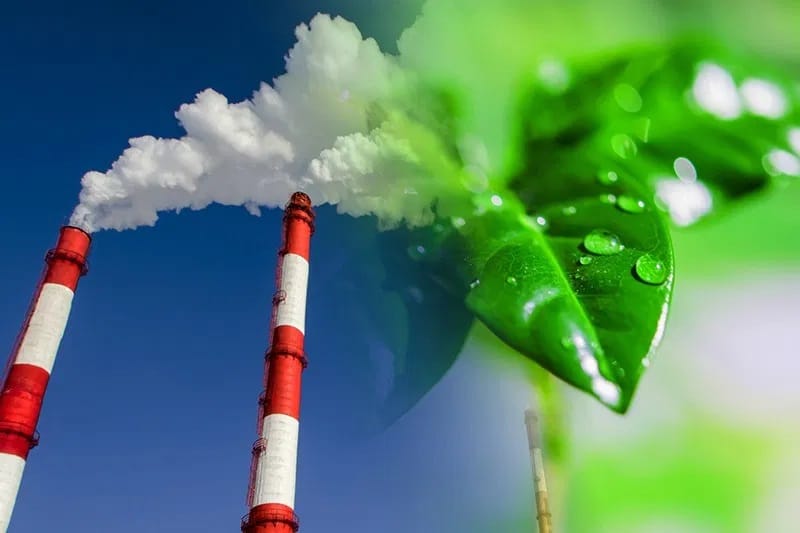
Substances in the form of suspended solid particles (hereinafter – SSP) with a size of up to 10 μm (PM10) and up to 2.5 μm (PM2.5) are one of the most common air pollutants in the world as a whole and in Ukraine in particular. They are the most dangerous to humans and the environment, even in very low concentrations. In fact, there is no limit to the fact that there is no damage to health. PM2.5 is the best indicator for predicting acute and chronic diseases caused by exposure to suspended solids. They have a pathological effect on the respiratory system of people, cause acute and chronic allergic reactions.
There are the main negative consequences of the entry of STC (PM2.5 and PM10) into the air: deterioration of air quality, impact on human health, impact on climate change, impact on the ecosystem.
In Ukraine, suspended solids PM2.5 and PM10 are the third largest emitters of pollutants emitted into the atmosphere. Statistics on emissions of these indicators have been kept since 2004, but no sanitary or ecological standards have been established for them.
The study of PM10 and PM2.5 species and their impact on the environment and human health is one of the main tasks of environmental safety. In Ukraine, there is an urgent need to study the sources of PM10 and PM2.5 in the air, to determine the characteristics of these solid particles and possible ways to reduce their concentration in the air to comply with environmental safety standards.
Fine dust is formed in technological processes in which bulk materials are used, in particular in the food, construction, chemical and agricultural industries. It should be noted that the existing dust cleaning equipment needs improvement for effective capture of organic PM2.5 and PM10.
However, control and accounting of PM10 and PM2.5 emissions, as the most dangerous fraction of suspended solids, should be carried out in order to determine their environmentally important characteristics, features of scattering of these particles and concentrations at the sanitary protection zone and development of methods to intensify their capture.
In order to implement the provisions of Directive 2008/50 / EC and Directive 2004/107 / EC 22, the Procedure for State Monitoring in the Field of Atmospheric Air Protection (CMU Resolution of 14.08.2019 №827) was approved, which introduced a new air monitoring system and basic control elements. air quality in accordance with these directives. After the approval of the resolution of 14.08.2019 №827, in fact, at the level of EU and Ukrainian legislation, the same air quality standards are set. Every enterprise that releases pollutants into the environment, including PM2.5 and PM10. should control the amount of these substances.
The accredited laboratory of the Center LTD company center-ltd.com.ua has the most modern equipment and provides full-fledged ecological services of measurement of quality of environment: analyzes of quality of air, water, soils. We are one of the first in western Ukraine to confirm our professional competence, receiving at the end of 2020 the Accreditation Certificate in accordance with the requirements of DSTU ISO / IEC 17025: 2017 (in Ukraine) and ISO / IEC 17025: 2017 (internationally) “General requirements for the competence of testing and calibration laboratories” in the field of: study of industrial premises, residential and public buildings, residential areas, boundaries of sanitary protection zone, emissions of organized industrial stationary sources of air pollution, drinking water, return water, wastewater, surface and groundwater and soils.
New, modern approaches to the management of the laboratory according to the ISO 17025: 2017 standard, modern calibrated devices fully meet the requirements of the world scientific community, and thus improve the level of provision of services for the control of substances entering the environment.
Determination of the concentration of undifferentiated particles PM2.5 and PM10 is performed by the laboratory using the air quality analyzer CEM DT – 9881.
It is, in fact, a mini-laboratory of environmental control, which is widely used in various industries to determine the following parameters: the content in the air of fine (0.3; 0.5; 1.0; 2.5; 5.0; 10 μm) particles dust, concentration of carbon monoxide and formaldehyde in the environment, air temperature, relative humidity and dew point temperature.
By contacting us, you can always count on guaranteed accuracy of any measurement of environmental indicators, as well as the best conditions for cooperation, which will save your health, resources and save time.
Our contacts: 79026, Lviv, Sakharova str., 41, 380 96 781 05 37, [email protected]
What are PM2.5 and PM10 particles
PM10 are particles of a substance with a diameter of 10 micrometers or less, PM2.5 are particles of a substance with a diameter of 2.5 μm or less. For comparison, the thickness of the human hair is about 100 μm, so the cross section of the hair can be arranged in about 40 fine particles.
PM2.5 particles are known to be extremely dangerous to health because they enter the bloodstream directly through the lungs, where they adversely affect the health of us and our children.
A particularly unpleasant point is the fact that these particles are often similar in structure to activated carbon and absorb harmful substances from the air. And so they serve as a “transport” that brings into our body all the accompanying harmful substances from the atmosphere. A particularly dangerous “passenger” of such particles is benzopyrene – a carcinogen, a substance of the first class of danger.
Oleg Bota, Olena Vitrak, Center LTD Company